The Shoulder
Preliminary examination
One or more muscles of the upper quadrant are weak
- The detection of a weak muscle must force the examiner to perform a thorough examination of the cervical spine and an extensive neurological
examination of the upper limb.
The follwing situations are possible:
C5 
A motor deficit of the C5 root causes not only marked weakness of the abduction of the shoulder, but also weakness of both lateral rotation of the shoulder and flexion of the elbow.C6 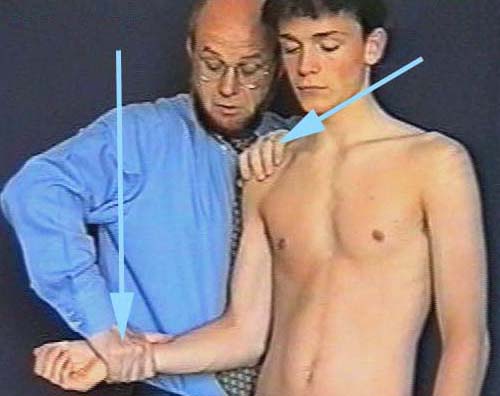
A weak flexion of the elbow is usually the first sign of a C6 deficit.C6 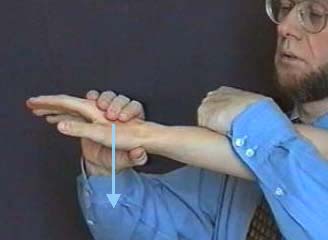
A C6 deficit provokes besides a weak flexion of the elbow also a weak extension of the wrist.C7 
A C7 deficit usually results from a disco-radicular conflict. The elbow extension may be extremely weak.C7 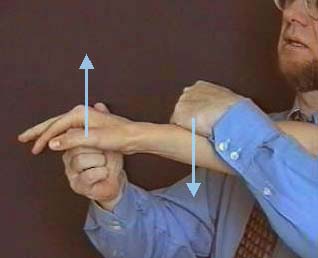
A C7 deficit provokes besides a weak extension of the elbow also a weak flexion of the wrist.C8 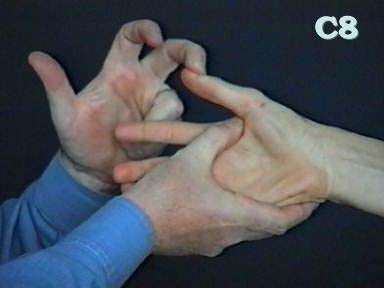
A weak extension of the thumb may be one of the signs of a C8 deficit. In this case, also the resisted ulnar deviation will be weak.T1 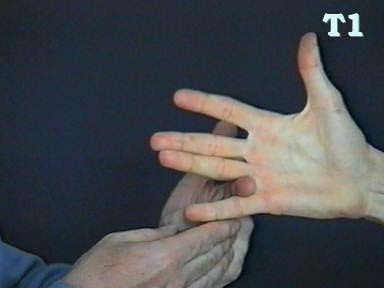
A weakness of the interossei (adduction of the fingers) may be the first sign of a pathology of the D1 root.
Compression of the first thoracic root by a T1 disc protrusion is very uncommon, and consequently a weakness of the intrinsic muscles of the hand is never due to a disco-radicular conflict. - The detection of pain during the muscular testing must motivate to a thorough clinical examination of the respective joints (shoulder, elbow or wrist).
| [Start] | [Main shoulder] | [Flowcharts shoulder] | [A System of Orthopaedic Medicine] |
Copyright © 2021 DR. L. OMBREGT All Rights
Reserved
The author can not be held responsible for any damage caused by the use of any information provided.